
Water Heater Anatomy: Know Your Water Heater
(Anatomy of a Traditional Gas Burning Tank Water Heater)
A Simple Guide to the System That Keeps Your Home Comfortable
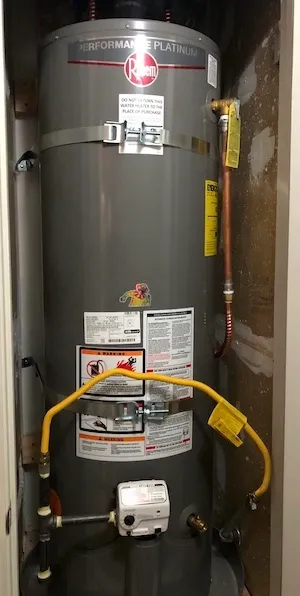
In your home, your water heater is your constant companion and an absolute necessity to your daily modern life. We don’t think about it hardly at all until something goes wrong. Suddenly, there’s no hot water. Or the shower doesn’t feel quite right. Or there’s a sound you’ve never heard before. When that happens, it’s natural to feel unsure about what’s normal and what’s not.
The good news: Water heaters are not rockets. The science behind them is fairly basic and you will have no problem understanding them if you take a little time. You don’t need to be a plumber to recognize when something might need attention. And you don’t need to panic when it is misbehaving. We will brief you on how a water heater works, the main parts, and how they all work together to keep your home comfortable.
What Is a Water Heater?
A water heater’s job is simple: to heat water and keep it ready for when you need it. Hot water is more than a luxury. It is hygienic: showers, hand washing, washing dishes. It is essential to cooking: pasta, steaming vegetables, canning. It is comforting—cold showers and baths might be therapeutic but nothing beats the comfort of soaking in hot water. Live a day or two without hot water and you will become intimately in tune with how important your hot water and, in turn, your hot water heater is to your life. Whether it’s a warm shower, clean dishes, or a load of laundry, your water heater quietly does its work behind the scenes. Most systems cycle on and off automatically, maintaining a safe water temperature and tank pressure throughout the day. While designs vary, nearly all residential water heaters share the same core components — and understanding them can help you spot issues early and make confident decisions when something doesn’t feel right.
The Daily Life of Your Water Heater
Throughout the day, your water heater quietly works in the background, responding to the rhythms of your home. When someone turns on a faucet or steps into the shower, hot water leaves the tank and is replaced by cooler water flowing in. The water heater’s thermostat senses this temperature change firing up the burner, heating the new water and restoring balance. It does this over and over — early mornings, busy evenings, and everywhere in between — adjusting to demand without asking for attention. Most of the time, you never notice it doing its job, and that’s exactly the point. When everything is working as it should, your water heater simply keeps life moving comfortably, one warm moment at a time.
The Main Parts of a Water Heater
Think of a water heater as a small system where each part plays a specific role. When one part struggles, others often feel the effects. Below is an overview of the main components—click through to learn more about each one.
The Tank
The insulated steel cylinder that holds and stores your hot water. Multiple layers—outer shell, foam insulation, and a glass-lined inner tank—work together to retain heat and resist corrosion. The drain valve at the bottom lets you flush out sediment that builds up over time.
Cold Water Inlet & Hot Water Outlet
Cold water enters through a pipe at the top, but a dip tube carries it down to the bottom where the burner heats it. Hot water exits from the top—because heat rises, you always get the hottest water first.
The Burner & Flue
The burner sits beneath the tank and produces the flame that heats your water. The flue carries exhaust gases—including carbon monoxide—safely out of your home. A healthy flame burns blue and steady.
The Gas Control Valve
The brain of the operation. This valve decides when to heat, how much gas to use, and when to shut everything down. It includes the thermocouple (a safety sensor that detects the pilot flame) and the temperature probe that monitors water temperature.
The Pilot Light
A small, steady flame that ignites the main burner when hot water is needed. If yours goes out, relighting it is usually straightforward—but gas appliances deserve respect.
Temperature & Pressure Relief Valve (T&P Valve)
Your water heater’s most important safety device. If temperature or pressure inside the tank gets too high, this valve opens to release it safely. Never cap or block this valve—it’s there to prevent catastrophic failure.
Earthquake Straps, Stands, & Drain Pans
The parts that don’t heat water but keep everything safe. Earthquake straps secure the tank to the wall. Stands elevate garage units above flammable vapors. Drain pans catch small leaks before they become big problems.
The Expansion Tank
Not part of the water heater itself, but essential in homes with closed plumbing systems. When water heats up, it expands—and the expansion tank absorbs that extra pressure so your pipes and fittings don’t have to.
A Brief History
Water heaters go back further than you’d think. There’s a surviving Roman boiler system with bronze fittings, lead pipes, and valves—proof that hot water on demand isn’t a modern invention. Like many Roman technologies, it was lost for centuries.
The modern era started in 1868 when a painter named Benjamin Waddy Maughan invented a way to heat water flowing through pipes. It worked, but without proper venting, it was dangerous. Edwin Ruud fixed that in 1889 with a cast iron tank, a gas burner, and a ventilation system. That’s essentially what’s still in your garage today—just safer, more efficient, and with built-in protections those early models never had.
A well-maintained water heater can last a decade or more. Not bad for technology that’s been around since the Romans.
When Something Feels Off
You don’t need to know every technical detail to recognize when something’s wrong. Watch for:
- Water not getting hot (or not staying hot)
- Strange noises—popping, rumbling, or knocking
- Water pooling around the base
- Inconsistent temperature or pressure
If something seems unusual, it’s worth investigating. Most problems are easier to fix when caught early. Give us a call if you’re not sure what you’re looking at.
You’ve Got This
Your water heater works hard every day, usually without any attention at all. When something goes wrong, it’s rarely a disaster—it usually means something small needs care. Now that you understand the basics, you’re better equipped to spot issues early and make informed decisions when it’s time to act.
Questions? We’re here to help.
Water Heater Services in Your Area
Need water heater repair or replacement? We serve homeowners throughout the North Bay:
- Water Heater Repair & Replacement — Our main service page
- Sonoma County plumbing
- Marin County plumbing
Need Professional Plumbing Help?
Our expert plumbers are ready to assist with any plumbing issue.
Schedule Service