
Fire and Air: The Burner and Flue
The burner makes the heat. The flue gets rid of the exhaust. Together, they’re the reason your water heater works—and the reason it doesn’t fill your house with carbon monoxide. Worth understanding.
The Burner
The burner sits at the bottom of your water heater, underneath the tank. When the thermostat says “heat,” gas flows to the burner and ignites. The flame heats the bottom of the tank, which heats the water inside. When the water reaches temperature, the burner shuts off and waits.
What a healthy flame looks like: Blue and steady. If you see yellow flames or flickering, that’s incomplete combustion—could be an airflow problem, could be something else. Either way, worth having someone look at it.
The Flue
Burning gas produces exhaust, including carbon monoxide. That exhaust needs to go somewhere that isn’t your living room. The flue is the metal pipe that carries it up and out of your house.
Hot gases rise naturally, so most traditional gas water heaters don’t need a fan—the flue just channels the exhaust upward through your roof or wall. Simple physics, but it only works if everything is connected properly.
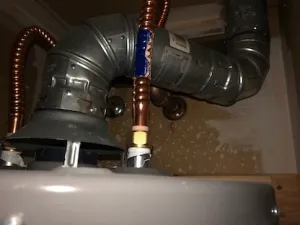
What to Check
You can spot potential problems with a quick visual inspection:
The draft hood (the metal cap on top of the heater) should sit flat and even. If it’s crooked, crushed, or disconnected, exhaust isn’t going where it should.
The flue pipe should be rigid metal, properly joined, and secure. If you see duct tape anywhere on the flue, that’s a red flag. Duct tape doesn’t belong on exhaust venting—it means someone cut corners.
Soot or discoloration around the burner, draft hood, or flue is a warning sign. It usually means incomplete combustion or backdrafting—neither of which you want.
Why It Matters
When the burner and flue work together correctly, exhaust leaves your home safely. When they don’t, carbon monoxide can spill back into your living space. This isn’t a “maybe it’ll be fine” situation. CO is odorless and dangerous.
Proper alignment, clean connections, and no DIY tape jobs—these details matter.
Call Us If You See
- Loose or disconnected flue piping
- Duct tape on any part of the vent system
- Soot, rust, or corrosion around the burner or flue
- A gas smell near the heater
- Yellow or flickering flames
These don’t always mean disaster, but they do mean it’s time for a professional to take a look. Give us a call—we’d rather check it out and find nothing than have you ignore something serious.
Water Heater Services in Your Area
Need Professional Plumbing Help?
Our expert plumbers are ready to assist with any plumbing issue.
Schedule Service