
The Unsung Heroes: Earthquake Straps, Stands, & Drain Pans
Some of the most important parts of your water heater don’t heat water at all. They’re the boring bits—straps, stands, and pans—that sit there doing nothing until the day they save you from a flooded garage, a tipped-over tank, or worse. Let’s give them the attention they deserve.
Earthquake Straps
We live in California. The ground moves. Earthquake straps are metal bands that secure your water heater to the wall so it doesn’t tip over when things start shaking.
A 40-gallon tank full of water weighs over 300 pounds. If that tips, it can snap gas lines, rupture water connections, and crush whatever’s in its path. Even without a major quake, a bump or shift can cause problems if the tank isn’t secured.
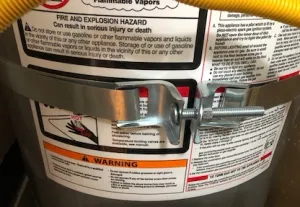
A proper installation includes:
- Two straps—one in the upper third, one in the lower third
- Anchoring into wall studs, not just drywall
- Snug fit without crushing the tank
If your straps are loose, rusty, or missing entirely, give us a call. This is one of those fixes that’s cheap now and expensive later.
The Drain Pan
The drain pan sits underneath your water heater and catches small leaks before they become big problems. It won’t save you from a catastrophic tank failure, but it will catch the slow drip that would otherwise rot your subfloor or seep into your walls.
A good drain pan:
- Is corrosion-resistant
- Is large enough to catch the full footprint of the tank
- Has a drain line that leads somewhere useful (not just onto the floor)
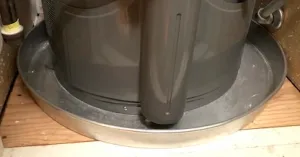
Here’s the thing: if you see water in the pan, don’t ignore it. Your water heater might still be working fine, but something is leaking. That’s your early warning system doing its job.
The Stand
If your water heater lives in the garage, it probably sits on a stand or platform. This isn’t just to make it easier to access—it’s a safety requirement.
Gas water heaters have a burner at the bottom. Gasoline fumes, paint thinner, and other flammable vapors are heavier than air and settle near the floor. The stand raises the ignition source above where those vapors collect.
A proper stand:
- Is made of non-combustible material (metal or concrete)
- Raises the heater at least 18 inches (check your local code)
- Provides a stable, level base
If your stand is cracked, wobbly, or your water heater is sitting directly on the garage floor, that’s something we should look at.
Why Bother?
These components protect against:
- Water damage to floors, walls, and belongings
- Fire hazards from flammable vapor ignition
- Structural damage from a falling tank
- The kind of emergency repairs that ruin weekends
They don’t make hot water. They make sure your water heater doesn’t make your life miserable.
If you’re not sure whether your setup is up to code—or you just want peace of mind—we’re happy to take a look. Contact us or call 707-200-8350.
Water Heater Services in Your Area
Need Professional Plumbing Help?
Our expert plumbers are ready to assist with any plumbing issue.
Schedule Service