
Cold In, Hot Out: The Water Connections
Cold water goes in. Hot water comes out. Simple, right? But there’s a reason these pipes connect where they do, and understanding the flow helps explain why your water heater works—and what might be wrong when it doesn’t.
The Cold Water Intake
Fresh water enters your water heater through a pipe at the top of the tank. But it doesn’t just dump in at the top—there’s a dip tube inside that carries the cold water all the way down to the bottom of the tank, where the burner does its work.
This matters. If cold water entered at the top and stayed there, it would mix with the hot water you’re trying to use. The dip tube keeps incoming cold water away from the outgoing hot water until it’s had time to heat up.
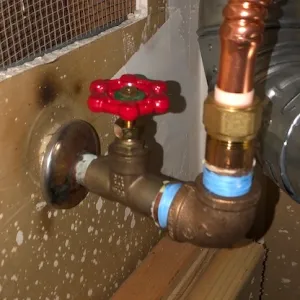
Look for the shutoff valve. There should be a valve on the cold water line that lets you cut water to the heater for maintenance or emergencies. Don’t let the red handle on the valve throw you off—it is on the cold side. If you don’t see one, let us know—some less scrupulous installers skip this step, and you’ll regret not having it when you need it.
The Hot Water Outlet
Hot water exits from the top of the tank. This isn’t arbitrary—hot water rises, so the hottest water in your tank is always at the top. When you turn on a faucet, that’s what you get first.
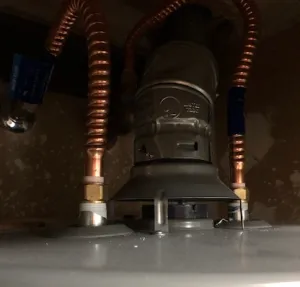
As hot water leaves through the pipe on the left in this picture, cold water enters below through the pipe on the right in the picture to replace it. The cycle continues all day, every day, without you thinking about it.
Why the Design Works
This setup keeps things balanced:
- Steady pressure in the tank
- Consistent temperature at the tap
- Efficient heating (cold water goes where the heat is)
- Less stress on internal components
When everything’s working, you get hot water on demand without temperature swings or surprises.
Signs Something’s Off
Watch for:
- Temperature that fluctuates mid-shower
- Less hot water than you used to get
- Leaks near the top of the tank
- Strange sounds when water is running
These can point to a failing dip tube, corroded connections, or other issues that are easier to fix early than late. Give us a call if something seems wrong.
The Dip Tube Problem
Worth mentioning: dip tubes can fail. They’re usually plastic, and over time they can crack, break apart, or disintegrate entirely. When that happens, cold water enters at the top and mixes with your hot water before it’s heated.
The result? Lukewarm showers and frustration. If your water heater is producing less hot water than it used to—but the tank isn’t leaking and the burner is working—a broken dip tube might be the culprit. It’s a relatively easy fix if you catch it.
Water Heater Services in Your Area
Need Professional Plumbing Help?
Our expert plumbers are ready to assist with any plumbing issue.
Schedule Service