
Inside the Tank: What's Actually in There
Your water heater looks like a big metal cylinder. Simple enough. But crack it open (don’t actually do this) and you’ll find a layered system engineered to hold pressure, retain heat, and resist corrosion for years. Understanding what’s inside helps explain why these things last as long as they do—and why certain problems are more serious than others.
The Outer Shell
The metal casing you see from the outside. It provides structure and protects everything inside from bumps, moisture, and temperature swings in your garage or utility closet.
Dents are usually cosmetic. Rust or corrosion on the outer shell is more interesting—it often means moisture is getting where it shouldn’t, which could indicate a slow leak somewhere.
The Insulation Layer
Beneath the shell is a thick layer of foam insulation. Its job is to keep heat inside the tank so your burner doesn’t have to work overtime.
Good insulation means:
- Lower energy bills
- More consistent water temperature
- Less wear on the system
Older water heaters have thinner insulation. If yours is more than 10-15 years old, it’s probably working harder than a newer model would.
The Inner Tank
This is where the action happens. The tank itself is steel, lined with a glass or enamel coating to prevent rust from constant contact with hot water.
That lining does a good job, but it’s not perfect. Over time, minerals settle at the bottom, tiny cracks develop in the coating, and corrosion finds a way in. This is why tanks eventually fail—and why the anode rod exists to buy you more time.
Warning Signs
Keep an eye out for:
- Water pooling near the base
- Rust-colored hot water
- A drain valve that’s stuck or leaking
- Rumbling or knocking during heating cycles
A word of caution: if your drain valve is stuck, don’t force it. Older valves can snap off, and then you’ve got a real problem. Call us if you’re not sure.
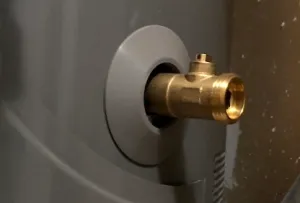
The Drain Valve
At the bottom of your tank is a small valve that lets you drain water and sediment out. Most people never touch it. That’s a missed opportunity.
Sediment builds up over time, especially if you have hard water. That layer of gunk:
- Makes your heater work harder
- Creates those popping or rumbling sounds you might hear
- Accelerates tank failure
Flushing the tank periodically clears this out. It’s one of the simplest maintenance tasks you can do—or have us do—to extend your water heater’s life.
The Bottom Line
Your tank is built to work quietly for years. But when the internal layers start to fail, things can go sideways fast. Knowing what’s inside—and what to watch for—gives you a head start on catching problems early.
Questions about your tank? Want us to take a look? Get in touch.
Water Heater Services in Your Area
Need Professional Plumbing Help?
Our expert plumbers are ready to assist with any plumbing issue.
Schedule Service