
Mill Valley Plumber Who Knows These Hills
You Need a Plumber in Mill Valley. We’re On It.
That hillside home with the redwood deck and the glimpse of the bay? It still has pipes that can leak, drains that can clog, and a water heater that will eventually give up.
And when something goes wrong, you need a plumber who can actually get to you— up the narrow road, past the tight switchback, to wherever your home sits on these slopes.
You’re in Mill Valley, and we know these hills. Call (707) 200-8350 and let us handle it. We’ll show up when we say, navigate whatever access challenges exist, and fix it right.
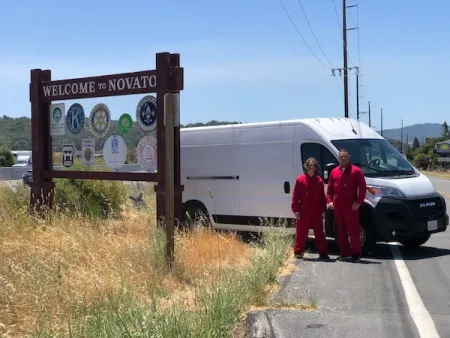
Plumbing Services in Mill Valley
Drains — Kitchen sinks, shower drains, main sewer lines. Mill Valley’s redwoods and mature trees send roots into sewer laterals. We clear lines and address the underlying cause.
Water heaters — Tank or tankless, repair or replacement. Hillside installations often mean tight spaces and access challenges. We’re equipped for it.
Emergencies — Active leaks, sewer backups, no water. We’re in Marin County, not fighting bridge traffic from the city. When it’s urgent, we move.
Sewer laterals — Camera inspections, root clearing, repairs, replacements. Mill Valley’s steep terrain and mature trees make lateral problems common.
Pressure regulation — PRV installation, repair, and replacement. Mill Valley’s elevation changes create pressure extremes that need management.
Repiping — When galvanized or aging copper pipes need replacement. In hillside homes, we plan routing carefully around the unique construction.
These are the Mill Valley plumbing services homeowners call us for most often.
Your Local Mill Valley Plumbing Company
We’re not a franchise. We’re not dispatching from San Francisco. We’re a local plumber in Mill Valley—a family plumbing company that’s been working in Marin County for three generations.
When you call, you get a plumber who knows the neighborhoods, the terrain, the housing eras, and the common problems. We show up when we say we will, explain what we’re doing, and clean up after ourselves.
Mill Valley’s character—from downtown Victorians to hillside contemporaries to Tam Valley ranches—means plumbing here isn’t one-size-fits-all. That’s exactly why local knowledge matters. That’s why we’re the plumbing company Mill Valley neighbors recommend.
What we quote is what you pay. No surprise line items. No invented problems.
Call (707) 200-8350 and let’s solve this.
Plumber in Mill Valley CA — Questions
How do I find a good plumber in Mill Valley CA?
What plumbing services do you offer in Mill Valley?
Do you offer residential plumbing repair in Mill Valley?
Do you provide emergency plumbing in Mill Valley?
Can you work on hillside homes with difficult access?
Why is my water pressure so high (or low) in Mill Valley?
Do you handle permits for plumbing work in Mill Valley?
Plumbing Repair in Mill Valley
When something breaks, you need it fixed—not a sales pitch for work you don’t need. We’re a plumbing repair company in Mill Valley that diagnoses first and recommends honestly.
Common repairs we handle:
- Leaky faucets, toilets, and supply lines
- Water heater repairs (or replacement when repair isn’t worth it)
- Garbage disposal replacement
- Fixture replacements and upgrades
- Pipe repairs and partial repiping
For bigger jobs, see our pages on water heater repair, leak detection, and whole-house repiping.
Call (707) 200-8350 for Mill Valley plumbing repair.
Residential Plumbing in Mill Valley
Most of our work is residential plumbing in Mill Valley—single-family homes, hillside contemporaries, downtown Victorians. We’re a residential plumber who understands that your home isn’t just a job site.
What residential plumbing service includes:
- Respecting your space (drop cloths, shoe covers, cleanup)
- Explaining what we find and what we recommend
- Pricing that’s clear before we start
- Warranty on our work
Whether it’s a quick repair or a major project, we treat your home like we’d treat our own family’s. That’s the residential plumbing Mill Valley homeowners have come to expect from us.
Downtown Mill Valley: Where It All Started
The blocks around Lytton Square and along Throckmorton Avenue are the historic heart of Mill Valley. Homes here date from the late 1800s through the early 1900s—built when the railroad brought San Franciscans to escape the fog and enjoy the redwoods.
This historic character comes with historic plumbing:
- Galvanized supply lines that have been corroding for 80-100+ years
- Cast iron drains that have lasted remarkably well but are now showing their age
- Clay sewer laterals with root intrusion from the redwoods and oaks
- Undersized gas lines that were adequate for 1910s appliances but struggle with modern water heaters
- Tight crawl spaces in homes built before modern access standards
We work in downtown Mill Valley regularly. We know how to approach older systems without creating new problems— and when to recommend modernization that respects the home’s character.
Tip: If you’re in a downtown Mill Valley home with low pressure or rusty water, galvanized pipes are the likely culprit. We can camera your lines and give you an honest assessment.
Cascade Canyon & Homestead Valley: Hillside Living
The neighborhoods climbing the slopes of Mt. Tamalpais—Cascade Canyon, Homestead Valley, Lovell Avenue area— offer stunning settings and unique plumbing challenges.
Access realities: Narrow roads, steep driveways, homes reached by stairs. We’re equipped to work in these conditions, but it affects how we approach jobs. Equipment that rolls easily on flat ground needs to be carried up 50 stairs.
Pressure extremes: Homes at higher elevations may have low pressure; homes at lower elevations often have pressure that’s dangerously high. PRVs (pressure reducing valves) are essential and need periodic replacement.
Hillside construction: Homes built into slopes have unique plumbing configurations. Gravity works differently when your bathroom is two floors above your water heater. Sewer laterals may run uphill to the main, requiring pump systems.
Redwood root intrusion: The magnificent redwoods that define these canyons also send roots into sewer lines. Root clearing is a regular maintenance item for many hillside homes.
If you’re in the hillside neighborhoods and dealing with pressure problems, recurring clogs, or access challenges, we understand the territory.
Tam Valley & Alto: The Flatlands
Not all of Mill Valley is hillside. Tam Valley and Alto sit in the flatter areas near Highway 101, with different housing stock and different plumbing considerations.
1950s-1970s tract homes: Much of Tam Valley was developed in the post-war era. These homes are now 50-70 years old, with plumbing systems reaching end-of-life:
- Original water heaters long since replaced (often multiple times)
- Galvanized pipes corroding and restricting flow
- Cast iron drains developing cracks and corrosion
- PRVs installed decades ago and due for replacement
Flood zone considerations: Parts of Tam Valley are in flood zones. Water heaters in garages or low areas may be at risk during major storms. Sewer laterals can experience infiltration during high water events.
Easier access: Compared to the hillside neighborhoods, Tam Valley homes generally have better access for equipment and materials—which can mean faster, more efficient service.
Pressure Problems: Mill Valley’s Elevation Challenge
Mill Valley’s dramatic terrain—from sea level to the slopes of Mt. Tam—creates water pressure variations unlike anywhere else in Marin.
High pressure (common in lower elevations):
- Water pressure above 80 PSI damages fixtures, appliances, and pipes
- Causes water hammer (banging pipes)
- Shortens water heater life
- Solution: PRV (pressure reducing valve) installation or replacement
Low pressure (common at higher elevations):
- Weak flow at fixtures
- Long waits for hot water
- Irrigation systems that don’t perform
- Solution: Pressure booster systems or addressing restrictions in supply lines
PRV maintenance: If your home has a PRV (most Mill Valley homes should), it needs replacement every 10-15 years. A failing PRV can cause either high or low pressure problems.
We can test your pressure and recommend the right solution for your elevation and situation.
Marin Municipal Water District
Mill Valley’s water comes from Marin Municipal Water District (MMWD)— California’s oldest water district, serving Marin since 1912.
MMWD draws water from local reservoirs (Mt. Tam watershed) and Russian River imports. The water quality is generally excellent, with moderate mineral content.
What this means for your plumbing:
- Gradual sediment buildup in water heaters over time
- Annual flushing extends water heater life
- Less scale buildup than harder water areas, but still present
MMWD publishes a water quality report annually. If you’re curious about what’s in your water—or if you’re seeing buildup and want to discuss filtration—we can help.
MMWD rebates: MMWD offers rebates for water-efficient fixtures and appliances. Check their rebate programs before upgrading.
Climate: Fog, Moisture, and Fire Risk
Mill Valley’s microclimate creates specific plumbing considerations:
Fog and moisture: The fog that rolls through the canyons keeps things damp. This accelerates corrosion on exposed plumbing components, especially in outdoor areas and uninsulated spaces. Water heaters in damp garages work in harsher conditions.
Redwood environment: The shade and moisture from redwood groves create conditions where mold and mildew thrive. Plumbing leaks in these environments can cause significant damage quickly if not addressed.
Fire risk: Mill Valley is in a high fire-risk area. Homes in the WUI (wildland-urban interface) face evacuation risks and potential fire damage. Seismic strapping and flexible gas connections on water heaters aren’t just code requirements—they’re safety essentials.
Earthquake preparedness: Marin County sits near active fault lines. Seismic strapping for water heaters is required by California code. We install proper strapping on every water heater.
Permits: City of Mill Valley
The City of Mill Valley Building Department handles permits for plumbing work. Water heater replacements, repiping, and major plumbing work require permits. We pull them when needed.
Mill Valley has specific requirements for hillside construction and work in environmentally sensitive areas. We’re familiar with the local requirements and handle the permitting process.
Selling your home? Sewer lateral inspections are common in Marin County real estate transactions. If your lateral has issues, you’ll want to know before listing. We can camera the line and give you an honest assessment.
Plumbing Throughout Marin County
Mill Valley is in the southern part of our Marin County coverage. We also serve San Rafael, Novato, Sausalito, Tiburon, Corte Madera, Larkspur, Kentfield, and San Anselmo.
If you’re in Marin County, we can get to you.
Let’s Get Your Mill Valley Home Back to Normal
Whether you’re in a downtown Victorian, a hillside contemporary, or a Tam Valley ranch, we’ll match the right solution to your home and your situation.
Three generations of Marin County know-how. One phone call.
Call (707) 200-8350. Let’s make your plumbing problem ours.
Need Plumbing Service in Mill Valley?
Our local experts are ready to help with all your plumbing needs.
Schedule Service