
Plumbers in Petaluma Who Want Your Problem to Be Ours
You Need a Plumber in Petaluma. We’re On It.
The water damage. Or the unusable toilet. Or the cold water coming out of your water heater. Or the clogged drain. The stress. The mental load of figuring out who to call and whether they’ll actually show up. A plumbing problem isn’t just a leak, clog, etc—it’s the disruption to your morning, your evening, your weekend plans.
We want to take all of that off your hands. Not just the repair, but the worry that comes with it.
Call (707) 200-8350 and let us make your Petaluma plumbing problem ours. We’ll show up when we say we will, protect your space, and leave you with a fix you feel confident about.
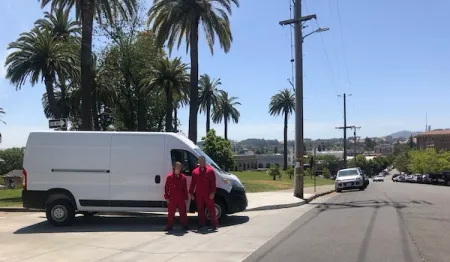
Plumbing Services in Petaluma
Drains — Kitchen clogs, shower drains, main line backups. In historic homes, we’re careful about how we clear lines—aggressive methods can damage old pipes.
Water heaters — Tank or tankless, repair or replacement. In older Petaluma homes, water heater replacement often means upgrading the gas line and venting too.
Emergencies — Active leaks, sewer backups, no water. We’re in Sonoma County, not fighting traffic from the city. When it’s urgent, we move.
Sewer laterals — Camera inspections, root clearing, repairs, replacements. Petaluma’s older laterals are often clay or cast iron and need careful assessment.
Repiping — When galvanized pipes have corroded past the point of repair, we can repipe with modern materials. In historic homes, we plan the routing carefully to minimize wall damage.
Toilet repair — Running toilets, weak flush, leaks at the base. Older Petaluma homes sometimes have non-standard toilet flanges that require creative solutions.
These are the Petaluma plumbing services homeowners call us for most often.
Your Local Petaluma Plumbing Company
We’re not a franchise. We’re not dispatching from San Francisco. We’re a local plumber in Petaluma—a family plumbing company that’s been working in Sonoma County for three generations.
Historic homes require patience and planning. You can’t just cut through walls. You have to think about how the house was built, what’s behind the plaster, and how to solve the problem without creating new ones.
When you call, you get plumbers who know Petaluma’s neighborhoods, housing eras, and common problems. We show up when we say we will, explain what we’re doing, and clean up after ourselves. That’s the kind of service that keeps Petaluma homeowners coming back.
Plumber in Petaluma CA — Questions
How do I find a good plumber in Petaluma CA?
What plumbing services do you offer in Petaluma?
Do you offer residential plumbing repair in Petaluma?
Do you provide emergency plumbing in Petaluma?
Can you help with recurring drain clogs in older Petaluma neighborhoods?
Do you install and repair water heaters in Petaluma?
What are red flags when hiring a plumber?
Plumbing Repair in Petaluma
When something breaks, you need it fixed—not a sales pitch for work you don’t need. We’re a plumbing repair company in Petaluma that diagnoses first and recommends honestly.
Common repairs we handle:
- Leaky faucets, toilets, and supply lines
- Water heater repairs (or replacement when repair isn’t worth it)
- Garbage disposal replacement
- Fixture replacements and upgrades
- Pipe repairs and partial repiping
For bigger jobs, see our pages on water heater installation, leak detection, and whole-house repiping.
Call (707) 200-8350 for plumbing repair in Petaluma.
Residential Plumbing in Petaluma
Most of our work is residential plumbing in Petaluma—single-family homes, condos, townhouses. We’re a residential plumber who understands that your home isn’t just a job site.
What residential plumbing service includes:
- Respecting your space (drop cloths, shoe covers, cleanup)
- Explaining what we find and what we recommend
- Pricing that’s clear before we start
- Warranty on our work
Whether it’s a quick repair or a major project, we treat your home like we’d treat our own family’s. That’s the Petaluma residential plumbing service we’ve built our reputation on.
Plumbing in Petaluma’s Historic District
Petaluma’s downtown and surrounding historic neighborhoods have some of the oldest plumbing in Sonoma County. We’re talking about homes built in the 1880s through the 1920s—buildings that predate modern plumbing codes by decades.
Working in historic Petaluma requires a different approach:
What we find: Original cast iron drain stacks that have been in service for 100+ years. Galvanized supply lines corroded to the point where a pencil wouldn’t fit through. Clay sewer laterals with root intrusion from trees planted when the homes were new. Drain configurations that made sense in 1910 but cause problems today.
What we do differently: In historic homes, we can’t always take the most direct path. Walls have plaster and lathe that’s expensive to repair. Floors have hardwood that’s irreplaceable. We plan our work to minimize damage to the historic fabric while still solving the plumbing problem.
Historic district permits: If your home is in the designated historic district, exterior changes may require additional review. Most plumbing work is interior and unaffected, but if you’re planning something that involves the exterior— like a new hose bib or exterior cleanout—it’s worth checking first.
If you’re in a historic Petaluma home and you’ve been told “you need to repipe the whole house,” get a second opinion. Sometimes that’s true. Sometimes there are less invasive options.
The Petaluma Gap: Wind, Fog, and Your Pipes
Petaluma sits in a gap in the coastal hills—the “Petaluma Gap”—that funnels marine air from the Pacific into the inland valleys. It’s why Petaluma is cooler and foggier than Santa Rosa, and why the wind can be relentless.
This matters for your plumbing:
Temperature swings: The Gap creates bigger daily temperature swings than you’d expect. Morning fog burns off to afternoon heat, then the marine layer rolls back in. Pipes expand and contract with these swings, which stresses joints and connections over years.
Moisture and corrosion: The fog carries salt air from the coast. Outdoor plumbing components, water heaters in garages, and anything exposed to the elements corrodes faster here than in drier inland areas.
Wind and outdoor plumbing: The Petaluma Gap wind is famous among locals. Outdoor fixtures, irrigation systems, and anything not properly secured takes a beating.
The Petaluma River and High Water Tables
Petaluma grew up around its river—it was a major shipping route in the 1800s. Homes near the river, Adobe Creek, and the various tributaries deal with plumbing challenges that homes on higher ground don’t face.
High water tables: In low-lying areas, the water table can be just a few feet below the surface. Sewer laterals sit in saturated soil, which accelerates corrosion and creates conditions where groundwater infiltrates the system through any crack or joint separation.
Flooding history: Parts of Petaluma have flooded repeatedly over the decades. If your home has been through floods, the sewer lateral may have been damaged in ways that aren’t obvious until problems start.
Basements and crawl spaces: Petaluma has more basements than most California cities—a legacy of its 19th century construction. Basements near the river can have moisture issues that affect plumbing, including sump pumps, floor drains, and water heaters.
East vs. West Petaluma
The railroad tracks that run through Petaluma roughly divide the city into two different housing markets—and two different plumbing situations.
West Petaluma: Older, more historic. This is where you find the Victorian homes, the Craftsman bungalows, the pre-war construction. Plumbing here is often original or has been patched over generations. We see galvanized pipes, cast iron drains, clay laterals, and the full range of vintage plumbing issues.
East Petaluma: More varied. You’ll find 1960s-1980s tract homes, 1990s-2000s subdivisions, and newer construction. The plumbing is generally newer, but these homes are now 25-60 years old. Water heaters are reaching end-of-life, PRVs are failing, and the “newer” pipes are starting to show their age.
North Petaluma: The newest development, mostly 1990s-2000s construction. Modern materials, but these homes are now old enough that water heaters need replacement and the first generation of fixtures is wearing out.
Russian River Water via the Petaluma Aqueduct
Petaluma’s water comes from the City of Petaluma, which has been receiving Russian River water through the Petaluma Aqueduct since 1961.
It’s the same source that supplies much of Sonoma and Marin counties—naturally filtered through gravel beds, meets all safety standards. But the mineral content is enough to cause scale buildup in water heaters over time, especially if you have a tankless unit that doesn’t get flushed annually.
The City publishes a water quality report each year. If you’re seeing white buildup on fixtures or your water heater is struggling, the mineral content is probably a factor.
Permits and Petaluma’s Building Department
The City of Petaluma Building Department requires permits for water heater replacements, repiping, and sewer work. We pull permits when they’re required.
Historic district: If your home is in the designated historic district, exterior changes may need additional review from the Historic and Cultural Preservation Committee. Most plumbing work is interior and doesn’t trigger this, but it’s worth knowing.
Selling your home? Sonoma County requires sewer lateral inspections for most sales. In Petaluma’s older neighborhoods, lateral failures are common. Better to know before you list than during escrow.
Plumbing Throughout Sonoma County
Petaluma is in the southern part of our Sonoma County coverage. We also serve Santa Rosa, Sonoma, Healdsburg, Penngrove, Cotati, and surrounding communities.
If you’re in Sonoma County, we can get to you promptly.
A 300-Amp Reminder: Why You Call Before You Cut
A Petaluma ranch owner needed water restored to a barn at the back of his property. The line had failed somewhere underground, and he’d already done some detective work—traced what he thought was the water main, dug a trench down to an inch-and-a-quarter PVC line, and had a reciprocating saw ready to cut.
He was seconds away from a fatal mistake.
That PVC wasn’t carrying water. It was carrying 300 amps of electrical service—the main feed for the entire back half of the property. When the saw blade made contact, the arc flash was immediate. The line melted. The blade melted. The air smelled like burning plastic and ozone.
By every reasonable measure, that cut should have killed him. 300 amps at 240 volts doesn’t give warnings. It doesn’t trip breakers fast enough to save you. It just conducts—through the blade, through the saw, through whoever’s holding it.
He got lucky. Impossibly lucky.
When we arrived, we started fresh—located the actual water line using proper tracing methods, excavated carefully, and restored service to the barn. The job itself was straightforward. The lesson wasn’t.
Unknown lines in the ground are never “probably” anything. PVC looks like PVC whether it’s carrying water, irrigation, low-voltage lighting, or enough current to stop your heart. If you don’t know what’s down there, don’t cut. Call someone who can find out safely.
Need Plumbing Service in Petaluma?
Our local experts are ready to help with all your plumbing needs.
Schedule Service